
About R-Type
R-Type arrived in 1987, in the middle of the arcade golden age, and promptly became the measuring stick for every side-scrolling shooter that followed it. Irem built it as a deliberate answer to the genre’s speed-first trend: instead of burying you under quantity, R-Type rations its enemies, telegraphs its attacks, and tests whether you can hold a precise line through a biomechanical nightmare — the flesh-and-metal fleet of the Bydo Empire. The art direction did half the work: corridors that look like living tissue, hatched alien carriers, and a sense of scale that peaks when something vast slides in from the right and fills the screen. Ports reached nearly every home computer and console of the late eighties, which is how a whole generation learned the word Bydo without ever seeing the cabinet.
Two ideas carry the game. The first is the charge beam: hold the fire button and your ship gathers energy at its nose, releasing a beam that punches straight through whole formations — and through the big targets that ordinary shots only tickle. The second is the Force Pod, a small round module that flies beside your ship, blocks enemy bullets outright, and fires its own stream while you hold the trigger; press the second button and it launches ahead of you to dock on the front or rear of your craft, becoming a ramming shield. Where the Force sits decides what is safe: docked forward it lets you fly through incoming fire, left free it guards your flank while you reposition. Nearly every death in R-Type is a Force in the wrong place.
The game’s influence is hard to overstate. The vocabulary it established — a chargeable super shot, a detachable option that doubles as armor, bosses that announce themselves — became standard grammar for horizontal shooters over the two decades that followed, and the series ran on through sequels on consoles for years, each refining the same systems. The first boss sealed its reputation too: a giant bio-ship that spells its own name across the screen, letter by letter — D-O-B — while you pick its segments apart, still one of the most quoted introductions in arcade history.
Here you play the original arcade version through the Internet Archive’s official emulator, streamed straight from archive.org — nothing to download, no account, and no cost. The board needs ten to forty seconds to boot on first load while the emulator streams and starts the machine; later visits are quicker because your browser keeps the files. It is a keyboard game: click the game area once so it catches your input, press 5 for a coin and 1 to launch. Desktop is the right way in — surviving the Bydo fleet asks for eight-direction precision a touch screen cannot give — and on a phone or tablet you are better off following the Internet Archive link from this page.
How to Play R-Type
- 1
Click the game area so the emulator receives keyboard input, press 5 to insert a coin, then 1 to start.
- 2
Fly with the arrow keys in all eight directions and hold your line — enemies enter from the right, and some from behind.
- 3
Tap Ctrl for rapid fire; hold it to charge the beam cannon, then release a shot that pierces everything in its path.
- 4
Press Alt to launch the Force Pod and press it again to recall it — dock it on your nose to punch through fire, or behind you to cover your tail.
- 5
At the end of each level a named boss arrives — the first one spells out D-O-B across the screen — and each of its parts must be dismantled.
- 6
Survive the Bydo fleet to the end of the level; lose your last ship and the run restarts from that stage with your power-ups gone.
Controls
These arcade cabinets use the standard emulator defaults — insert coin with 5, start with 1, move with the arrow keys. Every cabinet can be remapped in the emulator’s control panel (toolbar icon). Button functions below follow each game’s original cabinet layout.
| Keys | Action |
|---|---|
| Click the game area | First — the emulator needs focus to receive keyboard input |
| 5 | Insert coin |
| 1 | Start a one-player game |
| Arrow keys | Fly in all eight directions |
| Ctrl | Button 1 — fire; hold to charge the beam cannon, release to unleash it |
| Alt | Button 2 — detach or recall the Force Pod |
Keyboard bindings shown are the emulator’s standard defaults and can be remapped in-game (toolbar → control settings). This page documents each button’s original cabinet function.
Tips & Strategy
TIP 1
Charge during the calm, not in the storm: start building the beam in every lull so it is ready the moment a formation or mid-boss appears — holding a charge mid-dodge is how ships die.
TIP 2
Keep the Force docked forward by default; undock it when enemies press from behind or when you need to slip its bulk through a narrow gap.
TIP 3
The Force blocks bullets completely — park it between your ship and a boss’s beam, then walk the fight at your own pace.
TIP 4
The beam pierces, so spend charges on clusters first and mop up survivors with taps; doing it the other way round wastes the charge on leftovers.
TIP 5
Learn where enemies spawn instead of reacting to them: R-Type runs on fixed patterns, and a run that dies in the same corridor twice is asking for a different line through it.
Frequently Asked Questions
Who made R-Type, and when?
Irem released it to arcades in 1987, and its ports reached nearly every major home system of the late eighties.
Is it free to play here?
Yes — no account, no download, no cost. The original arcade board streams from the Internet Archive and runs in its official emulator on this page.
Why is the first load slow?
The emulator streams the game data from archive.org and boots the arcade hardware before you can play. Ten to forty seconds is normal, and later loads are faster because your browser caches the files.
Can I play on a phone or tablet?
Not comfortably — eight-direction dodging and charge timing need a keyboard. On touch devices, take the Internet Archive link from this page instead.
Ready to Play R-Type?
Free, instant and right on this page — no download, no signup. The cabinet is already warm.
More Games You’ll Enjoy
 ARCADE
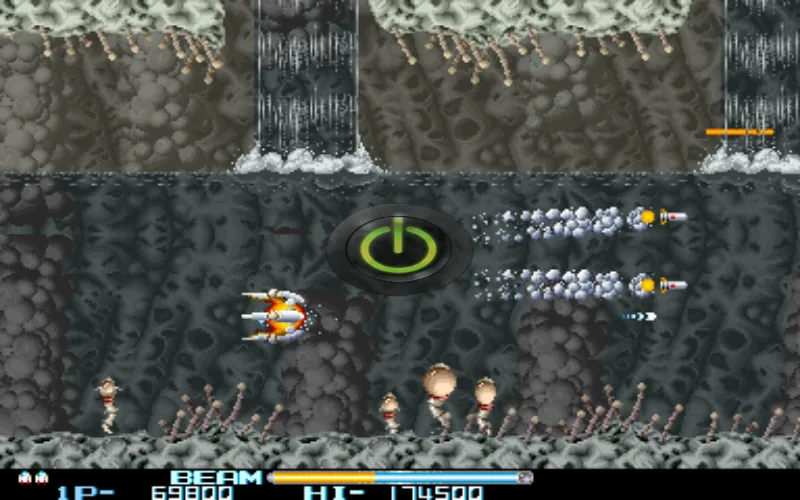
R-Type II
The Bydo return — upgraded Force forms and tracking missiles.
Shooting · 1989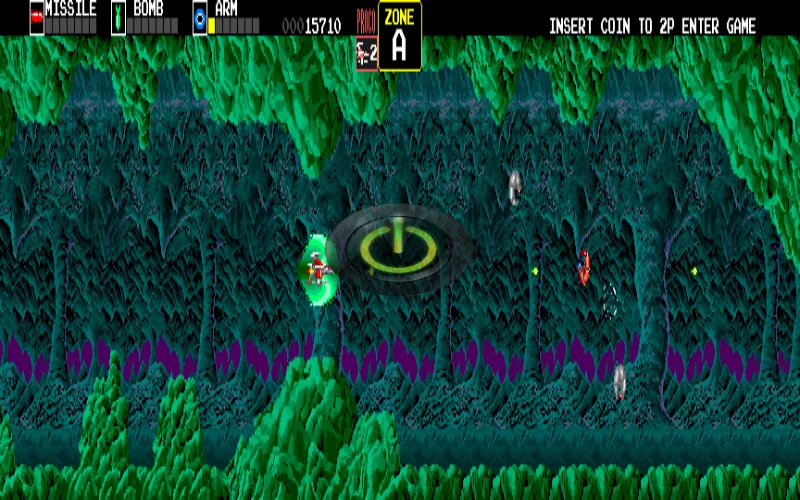 ARCADE
Darius
Taito’s three-screen panorama — fly the Silver Hawk.
Shooting · 1987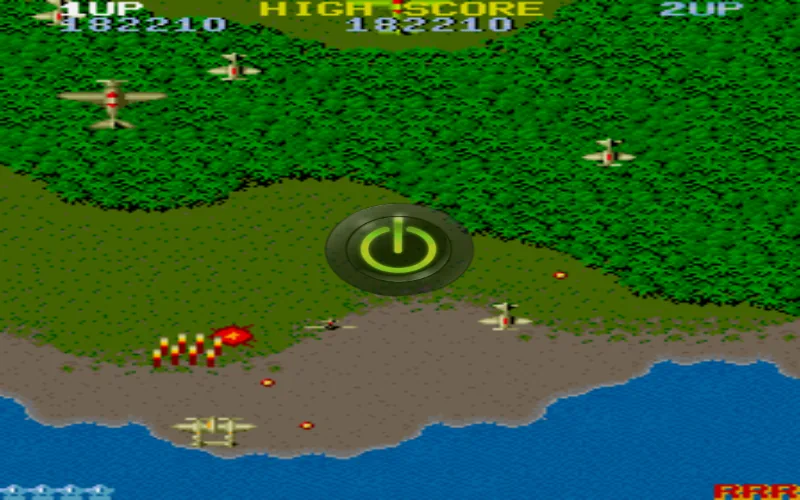 ARCADE
1942
Capcom’s 194X origin — bomb the fleet, catch the POWs.
Shooting · 1984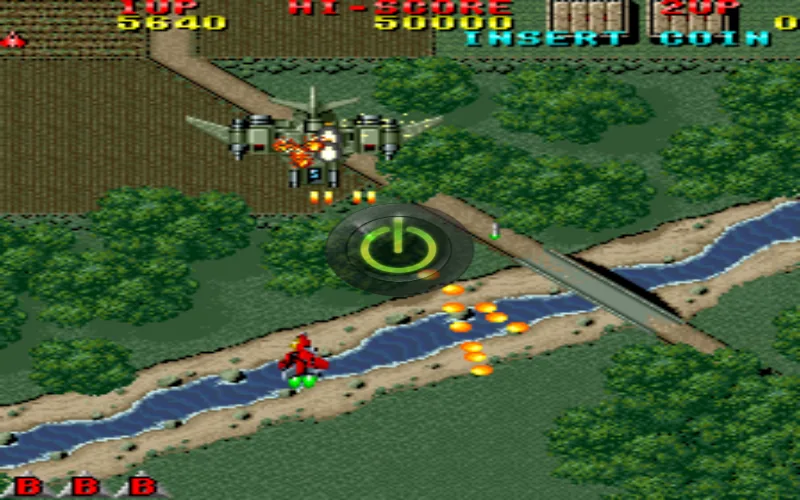 ARCADE
Raiden
Red Vulcan or blue Laser — the 1990 vertical-shooter name.
Shooting · 1990Explore more shooting games in the dedicated collection, or browse the full games catalog — from classic and puzzle to fast arcade and action titles. Every page plays instantly on desktop and mobile.