
Puzzle Games Online — Solve Free in Your Browser
Puzzle games are the quiet half of the arcade: no timers breathing down your neck, no enemies to outdraw — just you, a board, and a deduction chain waiting to be found. The puzzle games online in this collection are all fully free browser puzzles: sudoku with verified unique solutions, minesweeper with first-click safety, the fifteen puzzle, and the number-merging phenomenon 2048.
What these games share is honesty. Nothing here demands luck or guesswork — every state on every board can be solved by reading the constraints carefully, and the headers below each game explain exactly which techniques crack which situations. Solving one hard sudoku chain or an expert minesweeper field from pure logic is a genuinely different pleasure from scoring points, and it ages better than reflexes do.
All four titles generate fresh content every session, remember your progress on this device, and run just as well on a phone in one hand as on a desktop with a full keyboard. Pick a board and give your brain the good kind of workout.
A note on pace: nothing here will rush you. There are no pop-ups mid-solve, no energy meters to refill, and no accounts — the pause button is simply closing the tab, and your streak of solved boards survives in your browser for the next visit. Ten quiet minutes of deduction a day is the whole habit, and it costs less bandwidth than a single thumbnail from a video site.
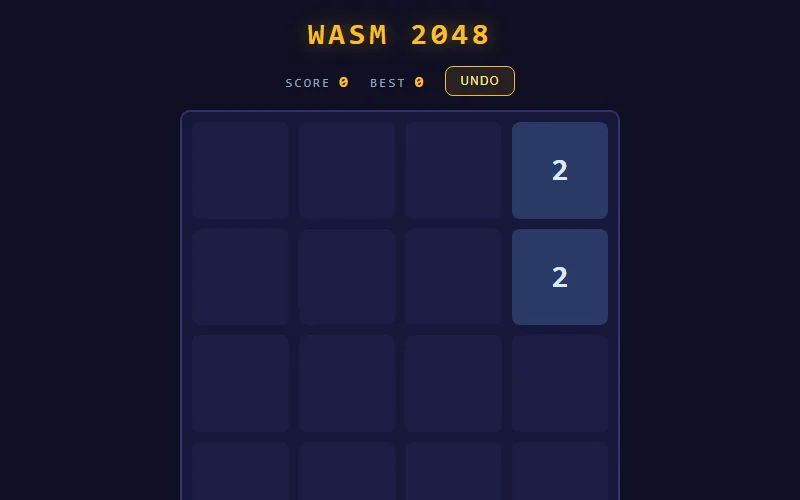 WASM
WASM2048 Game
Merge numbered tiles, chase the 2048 tile, keep going.
Puzzle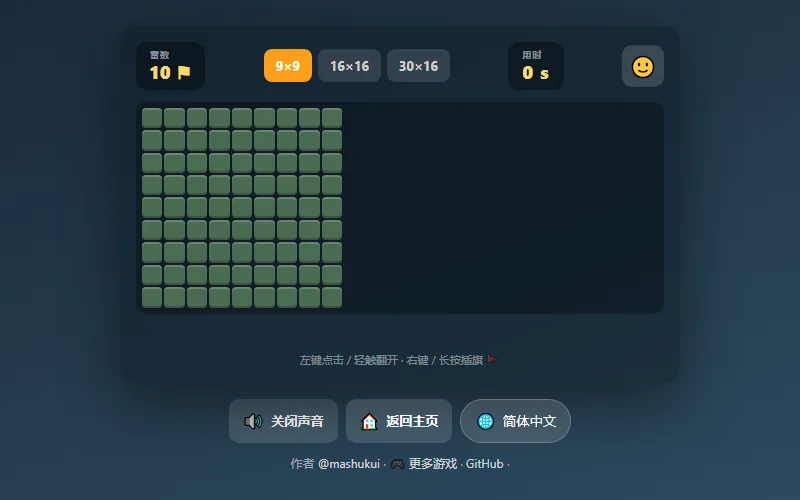
Minesweeper Online
Read the numbers, flag the bombs, clear the field.
Puzzle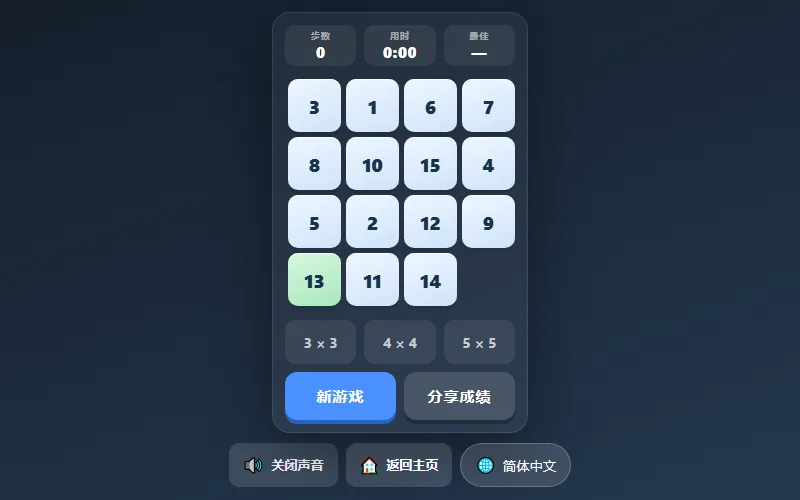
Slide Puzzle
The classic 15-puzzle — restore order in the fewest moves.
Puzzle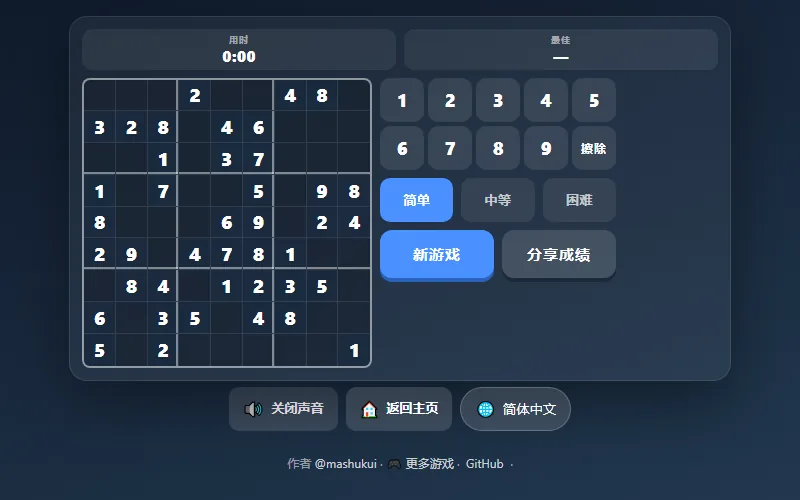
Sudoku
Three difficulties, every puzzle with exactly one solution.
Puzzle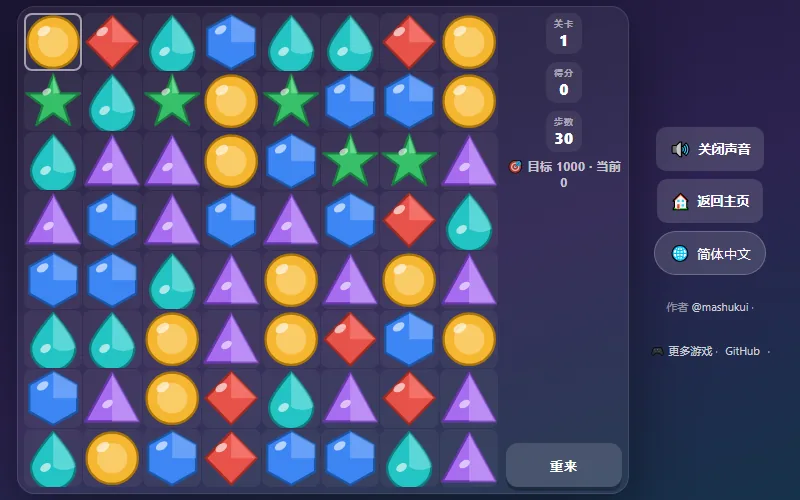
Gem Match
Swap, match three, cascade — 30 moves to beat each level.
Puzzle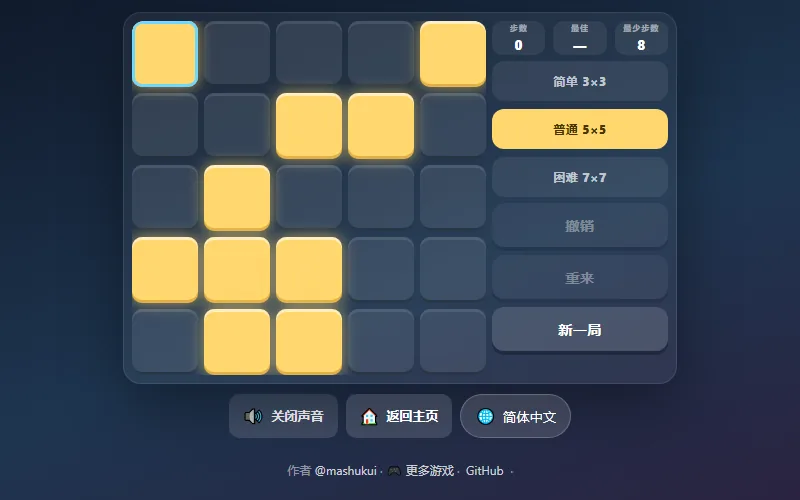
Lights Out
Flip a light and its neighbours — switch them all off.
Puzzle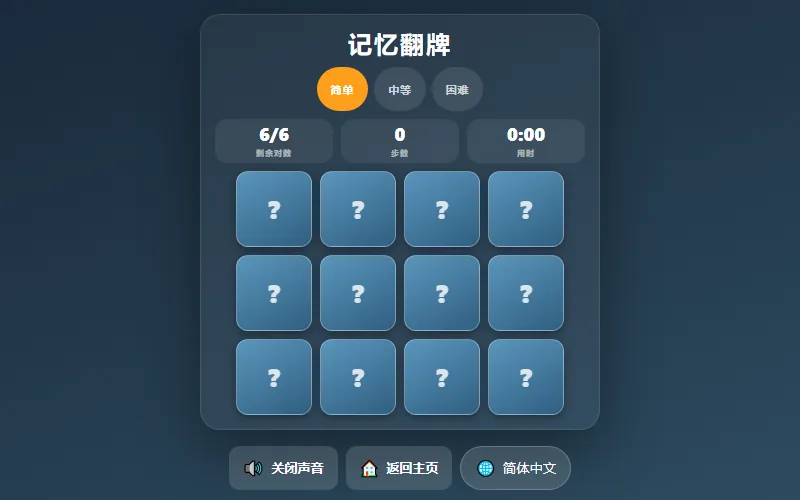
Memory Match
Flip two cards, find every pair, beat your fewest moves.
Puzzle
Merge Drop
Drop fruit, merge matching sizes, grow the watermelon.
Puzzle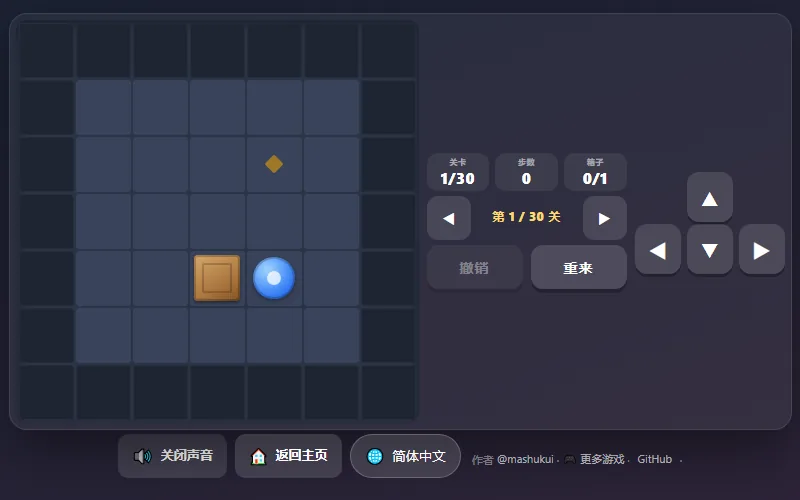
Sokoban
Push every crate onto a target across 30 clever rooms.
Puzzle
Water Sort
Pour the colours between tubes until each tube is pure.
PuzzleWhy Play Puzzle Games Online?
Because deduction is one of the few pleasures that sharpens with practice instead of wearing out. Reflexes fade by bedtime; the satisfaction of reading a Minesweeper pattern correctly does not. Puzzle games are also unusually honest about losing: a failed board always teaches something specific — a technique you had not tried, a constraint you misread — so even defeat moves you forward.
The format suits the browser perfectly, which is why puzzle games online have outlived every gaming fad around them. A board needs no controller, no tutorial and no download — the grid is the entire interface, so the same puzzle runs comfortably on a phone in one hand or a desktop with a full keyboard. Five spare minutes cover a few Sudoku deductions or a quick 2048 run, and since nothing here charges or interrupts you, the only pressure is the kind you bring to the grid yourself.
There is also a player the genre quietly specializes in: the person who wants to think but not perform. No opponent is watching, no timer is shrinking, and a wrong move costs a little time rather than a run. That makes these boards ideal for end-of-day wind-downs, for players who find action games stressful, and for anyone whose screen time should end calmer than it started.
A Short History of Logic Puzzles
The shelf is older than the web by a century or two. The Slide Puzzle’s fifteen tiles caused a genuine craze in 1880, when newspapers complained about people neglecting work over them. Sudoku’s numbered grids trace back to Euler’s Latin squares in the 18th century, but the modern puzzle arrived in 1979 as “Number Place” in an American puzzle magazine; Japanese publishers later renamed it Sudoku and settled the rules the world now plays.
Minesweeper grew out of mainframe-era mine-logic games and became world-famous once Microsoft started shipping it with Windows in 1990, quietly teaching a generation to read numbers as deductions. 2048 is the young one — a 2014 open-source weekend project built on the tile-merging idea, and the very version we ship here, only rebuilt as a genuine WebAssembly compilation for the speed it deserves.
Tips for First-Time Players
In Sudoku, scan before you deduce: pick the digit that already appears most on the board and sweep the rows and columns missing it — you will place far more numbers by scanning than by staring at one cell. In Minesweeper, treat every number as a sentence about its neighbors; a 1 touching a single covered square has already told you everything, and the corners usually open up faster than the middle.
For 2048, commit to a corner: pin your largest tile in one place, build descending ranks around it, and never swipe it loose. The Slide Puzzle surrenders row by row from the top, with each finished row locked out of future moves. And if a board ever looks impossible, remember that every generator here produces puzzles with a guaranteed solution — the flaw is in the reading, never in the puzzle.
FAQ
Do these puzzle games require any download or registration?
No. Every puzzle here runs entirely in your browser — the board generates the moment you press play. There is no account, no email and no payment anywhere in the flow.
Are the puzzles generated fresh every time?
Yes. Sudoku boards are generated on the fly with a verified single solution, Minesweeper fields are randomly laid out after your first safe click, and Slide Puzzle shuffles are always guaranteed solvable.
Which puzzle should a complete beginner start with?
2048 teaches its rules in one move and our Slide Puzzle offers a gentle 3×3 mode. Sudoku on easy and Minesweeper on beginner are the classic entry points once you want deeper deduction.
Do any of the puzzles run on WebAssembly?
Yes — 2048 is a genuine WASM build: its logic is compiled to WebAssembly and executes at near-native speed in your tab. The other three puzzles run on lean HTML5 engines, which suits them perfectly — a Sudoku grid has no frame rate to chase. Every board feels instant either way.
Can I leave a puzzle unfinished and come back later?
Absolutely — closing the tab is the pause button. There is no timer, no session fee and no penalty for walking away, and your best scores live in this browser’s local storage between visits. Boards regenerate fresh each session, which is part of the appeal: tomorrow’s Sudoku is a new puzzle, not homework.
When your logic needs a rest, test your reflexes in our arcade games and action games sections, or revisit the originals in classic games. Every title on the site is listed in the full games catalog, and the homepage features staff picks from across all puzzle and action genres.