
About Memory Match
Memory Match is concentration, the card game everyone has played at least once: a grid of face-down cards, two flips per attempt, and a pair stays open only when both halves match. It needs no reflexes, no timer pressure and no instructions — just a functioning short-term memory and the discipline to use it. Cards flip with a proper three-dimensional turn, and matched pairs settle into a soft green that quietly shrinks the board as you go. It is also one of the few games that works equally well for a six-year-old and a spreadsheet-addled adult, because the only difficulty dial is memory capacity itself.
Three deck sizes set the challenge: easy deals six pairs, medium eight, and hard twelve — the full six-row board that genuinely tests spatial recall. The emoji pairs are drawn fresh from a pool of two dozen symbols every round, shuffled before every deal, so no two games feel identical and memorising symbol positions from a previous round is worth nothing. What carries over is the skill, not the layout. The symbols themselves — animals, plants, a rocket, a donut — stay charming without ever becoming visually noisy, which matters more than it sounds when the whole game is looking at cards.
The scoreboard is honest: moves count pair attempts, the clock runs only while you play, and your best per difficulty is the fewest moves, with time breaking ties. Finish within two moves of mathematical perfection and the crown appears — on the twelve-pair deck that means clearing it in fourteen attempts or fewer, which is a genuine feat of bookkeeping rather than luck. Three HUD panels — pairs remaining, moves and a live timer — sit above the board, so you always know exactly where a run stands, and the end screen reports both numbers against your record for that difficulty.
The classic mistake is random flipping: two exploratory flips that reveal nothing are a wasted move, while the same two flips aimed at extending what you already know are an investment. It is the rare game equally at home in a classroom, a waiting room or a five-minute break — there is no fail state, nothing to install, no ads between rounds, and R reshuffles a fresh deck instantly whenever you want one. The deck also adapts to your screen: on short viewports the cards shrink just enough to keep every row visible, and the line beneath the board quietly shows your current best, so a target is always in the corner of your eye. Nothing needs an account, everything runs on your device, and a fresh deck loads faster than most pages finish. Hard mode is the honest test: twenty-four cards is where casual remembering stops working and real technique begins.
How to Play Memory Match
- 1
Pick easy, medium or hard — 6, 8 or 12 pairs.
- 2
Flip any card to reveal its symbol.
- 3
Flip a second card: if the symbols match, both stay face up.
- 4
On a miss, both cards flip back — remember where they were.
- 5
Open every pair to win; your moves and time are the score.
- 6
Finish within two moves of perfect to earn the crown.
Controls
| Keys | Action |
|---|---|
| Click / tap a card | Flip it face up |
| Flip a second card | A pair attempt: matches stay open, misses flip back |
| R | Reshuffle the deck and restart |
Tips & Strategy
TIP 1
Remember positions, not pictures: a mental grid address like second-row-far-right survives missed flips better than a vague image.
TIP 2
Turn every miss into data — two wrong cards revealed are two more cells of the map you did not have before.
TIP 3
When you know where a partner card lives, go collect it deliberately instead of exploring blindly.
TIP 4
Chase moves before speed: the record is fewest pair attempts, and fast play with wasted flips loses to slow play with intent.
TIP 5
On the hard deck, sweep the board in quadrants — four cards at a time keeps your mental map small enough to hold.
Frequently Asked Questions
What counts as one move?
Every pair attempt — two flipped cards — is a single move, win or lose. Fewer attempts is always the better score.
How is the best score decided?
Per difficulty: fewest moves wins, and if two games tie on moves, the faster time takes the record.
Is there a time limit?
No. The clock is informational and only records how long you took; nothing fails if you stop to think.
Are the cards the same every round?
The symbol pool is fixed, but which pairs appear and where they sit are shuffled for every deal, so a new round is always a new memory problem.
Ready to Play Memory Match?
Free, instant and right on this page — no download, no signup. The cabinet is already warm.
More Games You’ll Enjoy
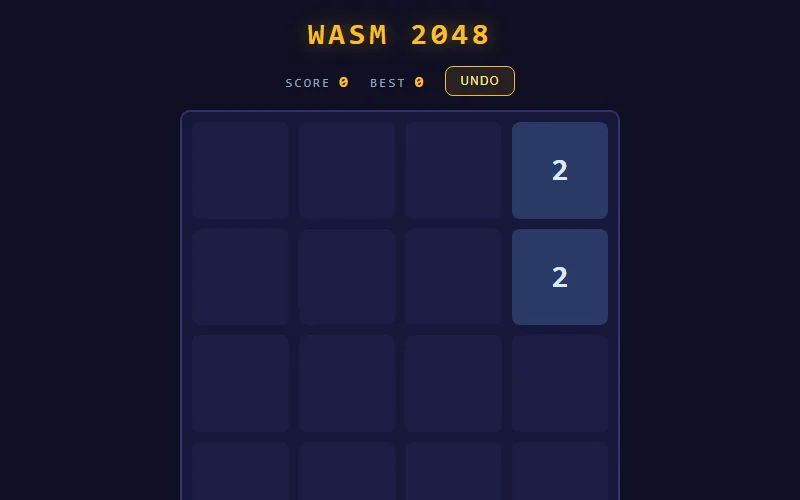 WASM
WASM2048 Game
Merge numbered tiles, chase the 2048 tile, keep going.
Puzzle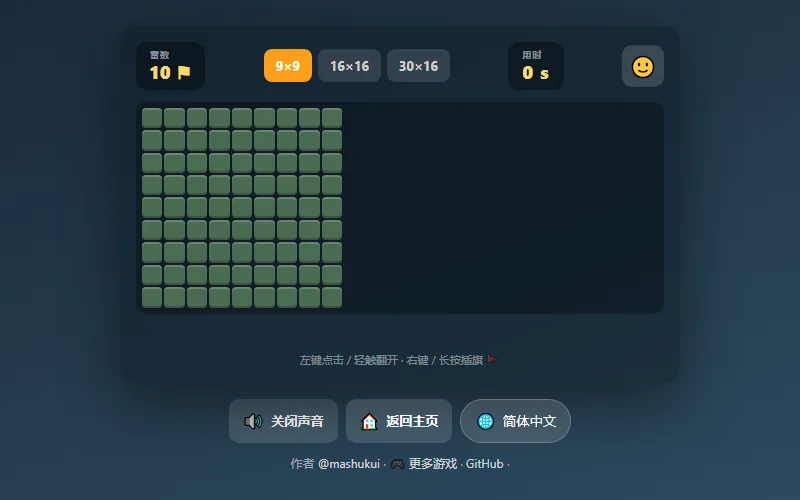
Minesweeper Online
Read the numbers, flag the bombs, clear the field.
Puzzle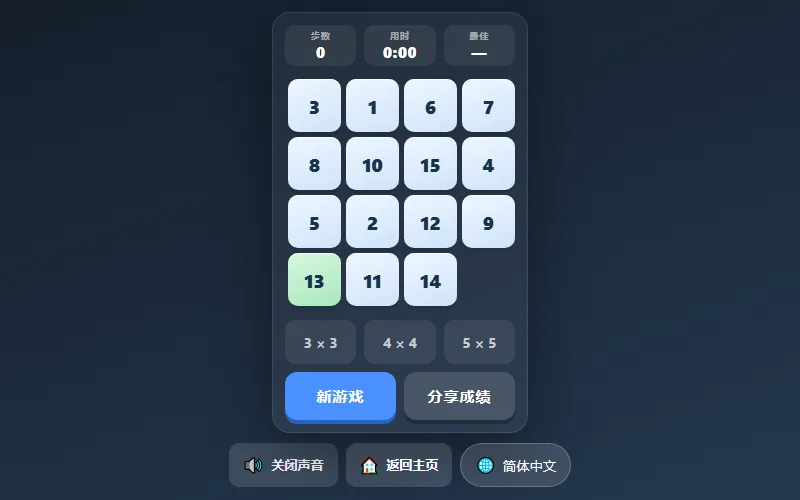
Slide Puzzle
The classic 15-puzzle — restore order in the fewest moves.
Puzzle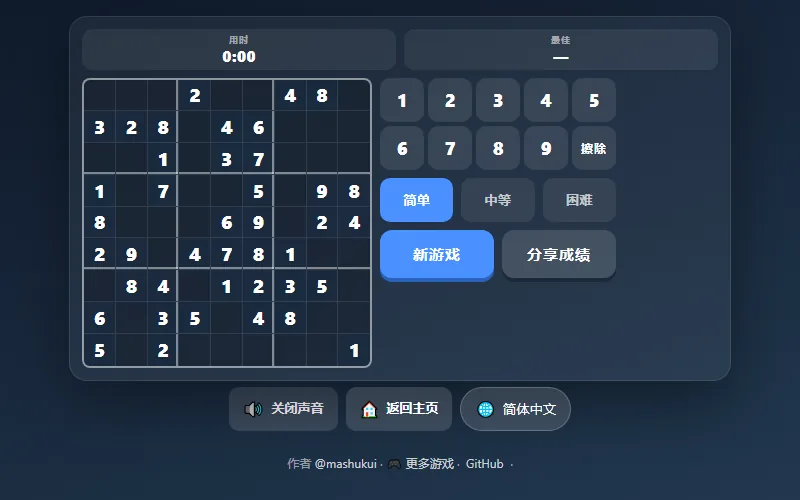
Sudoku
Three difficulties, every puzzle with exactly one solution.
PuzzleExplore more puzzle games in the dedicated collection, or browse the full games catalog — from classic and puzzle to fast arcade and action titles. Every page plays instantly on desktop and mobile.