
About Darius
Darius is the game that arrived in a cabinet you could not miss. Taito released it to arcades in 1987 with three monitors joined into one sweeping panoramic screen — several times the width of a standard cabinet — so the Silver Hawk, your fish-shaped attack craft, patrols a battlefield wider than anything else the arcade offered at the time. Enemies entered in formations that wrapped around the edges of that enormous field, bosses grew to absurd sizes to fill it, and sitting down at the machine felt closer to standing at a cinema screen than at a game. The triple-screen layout was rarely imitated, and it is still remembered as one of the boldest hardware bets of the golden age.
Under the wide glass sits a shooter with a very Taito temperament. The Silver Hawk fires forward and upward, drops bombs onto the scrolling surface below, and collects color-coded crystals that upgrade its shot, missiles and shield tier by tier. The enemy world is the game’s signature: an aquatic-mechanical biosphere, from crab-like carriers to colossal fish-shaped battleships, drawn with a confidence that made the ocean-theme the series’ trademark for decades afterward. Nothing on screen is subtle, and that is the point — the game stages its threats at a size most cabinets could not even display.
What truly separated it from its 1987 rival R-Type was structure. Instead of one fixed gauntlet, Darius branches: each zone ends with a choice of two exits, and the routes you take through the map — from zone A onward toward the far letters — decide which waters you cross and which of the game’s multiple endings you reach. Two players can fly the whole map together. The soundtrack, composed by Hisayoshi Ogura as part of Taito’s in-house team, gave every zone its own electronic identity, and arcade players still recognize those themes within seconds.
Set beside R-Type, released the same year, the philosophy is the opposite: where Irem’s game squeezed intensity into one narrow corridor, Darius spent its innovation on breadth — a wider screen, a branching map, and a structure built for repeated runs toward different endings rather than a single survival trial. It grew into one of Taito’s longest-running shooter series, keeping the ocean theme and route-splitting alive for years. Here the original plays free through the Internet Archive’s official arcade emulator — no download, no account — with a first load of ten to forty seconds while the board boots in your browser. Keyboard is the way in: click the game area, coin up, and launch; on touch screens, take the Internet Archive link instead.
How to Play Darius
- 1
Click the game area to give the emulator keyboard focus, press 5 to insert a coin, then 1 to start.
- 2
Fly the Silver Hawk with the arrow keys across the whole height of the wide screen — threats sweep in from the right edge in wide formations.
- 3
Hold Ctrl to fire your main gun and missiles, and keep the trigger working: uptime on fire is score and safety at once.
- 4
Press Alt to drop a bomb — it erases enemy shots and damages everything on screen, and your stock refills as you collect crystals.
- 5
Collect the color-coded crystals enemies leave behind to upgrade your weapons tier by tier; a higher tier makes the next zone noticeably safer.
- 6
Beat each zone’s guardian, choose one of two exit routes, and steer your run toward the ending attached to the final zone on your path.
Controls
These arcade cabinets use the standard emulator defaults — insert coin with 5, start with 1, move with the arrow keys. Every cabinet can be remapped in the emulator’s control panel (toolbar icon). Button functions below follow each game’s original cabinet layout.
| Keys | Action |
|---|---|
| Click the game area | First — the emulator needs focus to receive keyboard input |
| 5 | Insert coin |
| 1 | Start a one-player game |
| Arrow keys | Fly the Silver Hawk across the full height of the wide screen |
| Ctrl | Button 1 — fire the main gun and missiles |
| Alt | Button 2 — drop a bomb that clears enemy shots and damages everything on screen |
Keyboard bindings shown are the emulator’s standard defaults and can be remapped in-game (toolbar → control settings). This page documents each button’s original cabinet function.
Tips & Strategy
TIP 1
Bomb on instinct, not on schedule — the screen-wide formations of Darius build faster than they look, and a spent bomb beats a lost ship every time.
TIP 2
Take the safer branch after a rough zone: the map loops back on itself, and a modest route on a fully-armed ship outscores a greedy one on a broken hull.
TIP 3
Never meet a boss under-powered — if you missed the last crystal, sweep the waves just before the gate first, because tier gaps matter more here than in most shooters.
TIP 4
The screen is wider than your habits: check the far right edge constantly, since long-range formations open fire from beyond where a normal screen would end.
TIP 5
In two-player mode, agree on lanes and split the height between you — the wide field rewards coordinated coverage, not freelancing.
Frequently Asked Questions
Who made Darius, and when?
Taito released it to arcades in 1987, famous for its three-screen panoramic cabinet, and it grew into one of the studio’s longest-running shooter series.
Is it free to play here?
Yes — no account, no download and no cost. The arcade original streams from the Internet Archive and runs in its official emulator on this page.
Why does the first load take so long?
The emulator streams the board’s data from archive.org and boots the arcade hardware first. Ten to forty seconds is expected, and repeat visits start faster from your browser’s cache.
Can I play it on a phone or tablet?
Not really — sustained precision flying needs a keyboard. On touch devices, follow the Internet Archive link from this page and play where the keys are.
Ready to Play Darius?
Free, instant and right on this page — no download, no signup. The cabinet is already warm.
More Games You’ll Enjoy
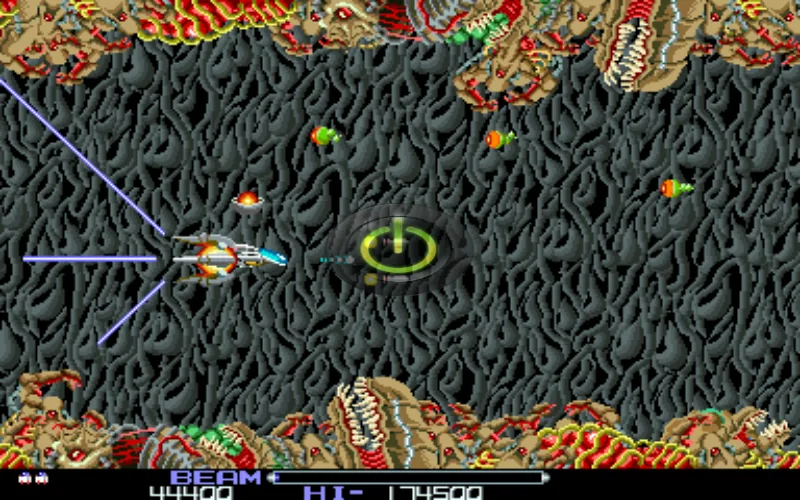 ARCADE
R-Type
Charge the beam, deploy the Force, dismantle the Bydo Empire.
Shooting · 1987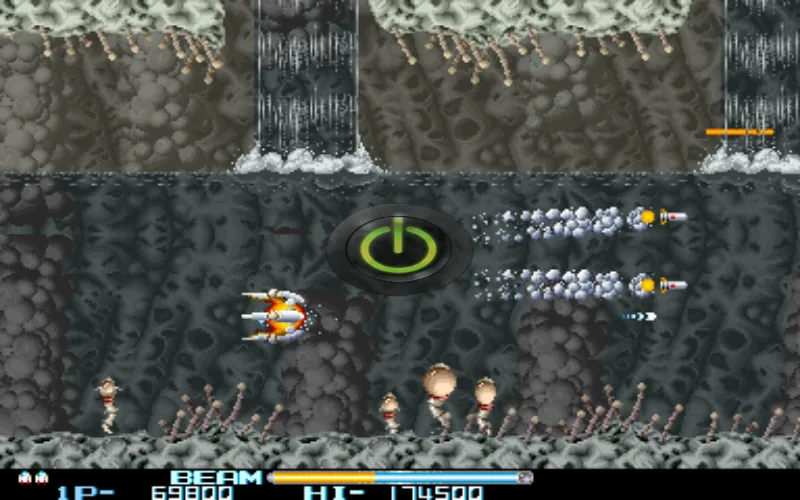 ARCADE
R-Type II
The Bydo return — upgraded Force forms and tracking missiles.
Shooting · 1989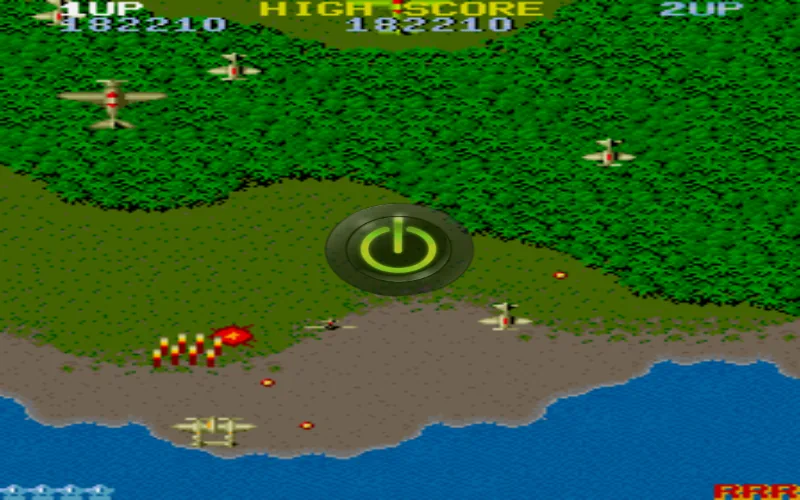 ARCADE
1942
Capcom’s 194X origin — bomb the fleet, catch the POWs.
Shooting · 1984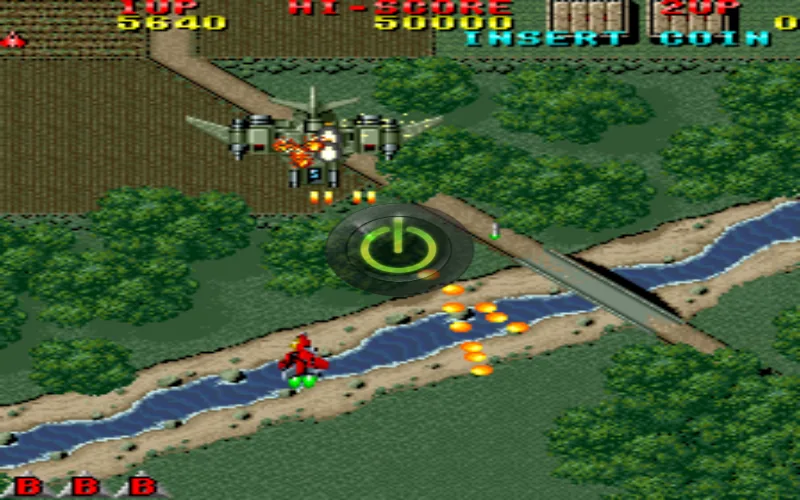 ARCADE
Raiden
Red Vulcan or blue Laser — the 1990 vertical-shooter name.
Shooting · 1990Explore more shooting games in the dedicated collection, or browse the full games catalog — from classic and puzzle to fast arcade and action titles. Every page plays instantly on desktop and mobile.